01
01Custom software
From prototype to production. Typical stack: Next.js, TypeScript, Postgres and APIs over what you already use. No replacing your existing stack when it works.

Forward Deployed Engineer. I go into your company, understand the problem as it arrives, design the solution and write the code your team will use tomorrow. Custom software, integrations, applied AI, architecture and data.
17 years · Software · AI · Data

I work with companies to turn badly defined problems, scattered across processes, systems and people, into tools that actually get used. Coordinated diagnosis, supervised development and a single point of contact when something breaks.
When what you need is to train the team instead of building, I do that too. Live online courses in groups of 10, with a final project applied to your real case: Google Sheets, Apps Script, generative AI, AGILE, DAMA fundamentals and Looker Studio.
Four areas, hired separately or combined. Same method: I start from the problem, not the technology. No extra layers, no AI added because it is trending.
01From prototype to production. Typical stack: Next.js, TypeScript, Postgres and APIs over what you already use. No replacing your existing stack when it works.
 02
02Automations with n8n, API integrations, RAG and agents with OpenAI, Anthropic or Google. Only where AI solves the problem, not where it looks good on the proposal.
 03
03Data Mesh models sized for real teams. Connected sources, clean KPIs and dashboards your team actually opens. Data governance without a 12-person committee.
 04
0412 hands-on courses in groups of 10 for when what you need is in-house autonomy: Google Sheets, Apps Script, generative AI, AGILE, DAMA and Looker Studio.
When your company needs an own operating system, adapted to your sector, scalable and without vendor lock-in, we integrate the four disciplines into a single delivery: Own Vertical Software (SVP). It starts from a vertical body already built for the sector and adapts to your actual operation.
Dedicated instance, your data, your rules, perpetual license of the core if agreed.
Scales without rebuilding the base. Ready for changes in states, roles, rules and integrations.
6 to 12 weeks from diagnosis to go-live. Dedicated Cloud or Local Server.
The three most-requested courses. All live via video, with templates and real cases from your work.
Vertical SaaS I built when I saw the same problem across multiple clients. Each solves something specific in a specific sector.

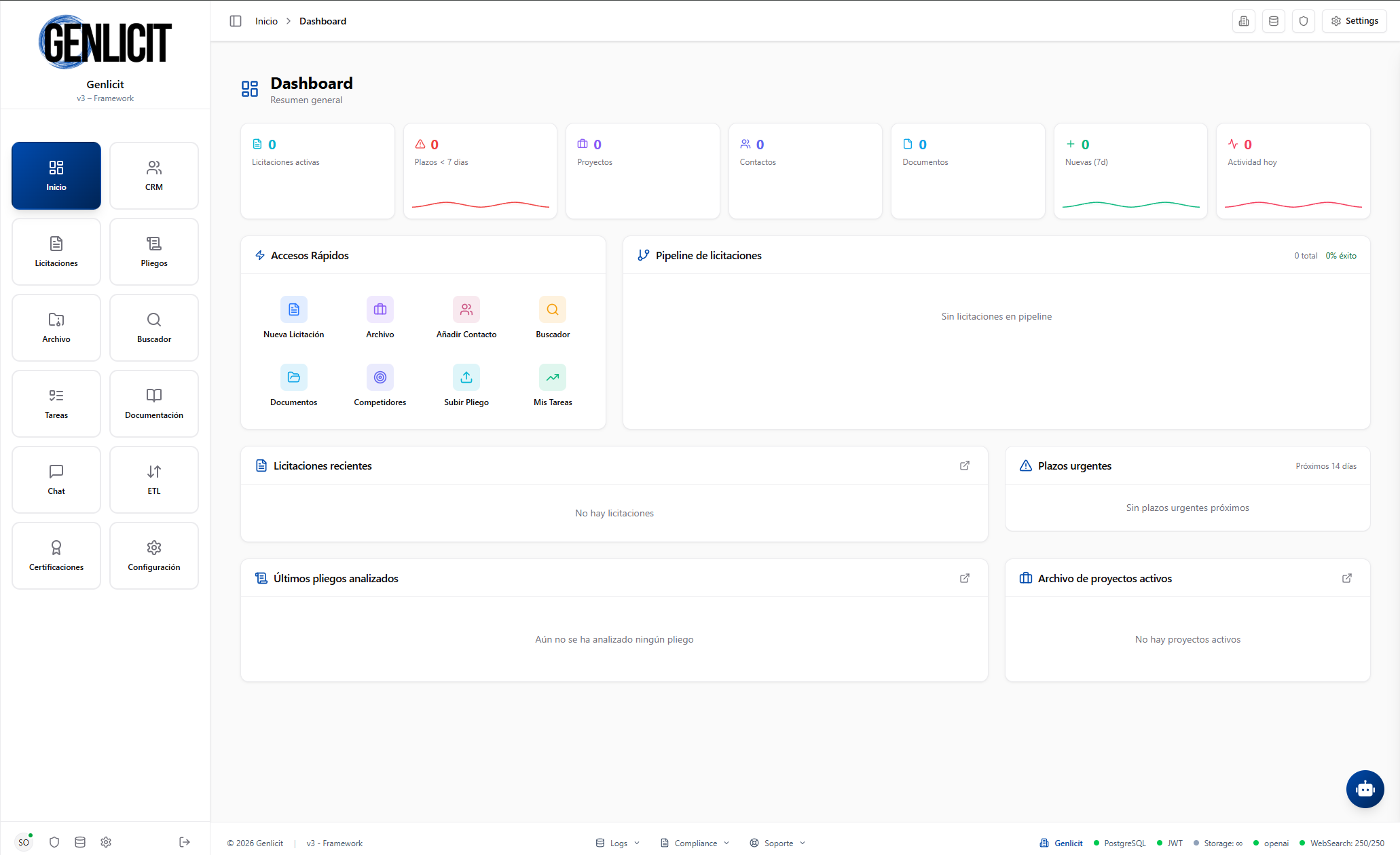
Genlicit
Análisis y propuestas de licitación
Genlicit centraliza toda la información empresarial (personas, proveedores, colaboradores, experiencia previa, certificaciones) para crear memorias técnicas y económicas adaptadas a cada concurso público. Combina un CRM con generación automática de CV y hojas de experiencia, un buscador activo que localiza licitaciones por parámetros personalizados, un sistema de puntuación que cruza requisitos, experiencia, equipo y competidores para dar una afinidad concreta a cada licitación, y un motor de gestión de costes que produce memorias económicas completas con líneas de gasto, materiales y servicios. Todo el procesamiento de información confidencial se mantiene dentro del perímetro del cliente.
genlicit.com

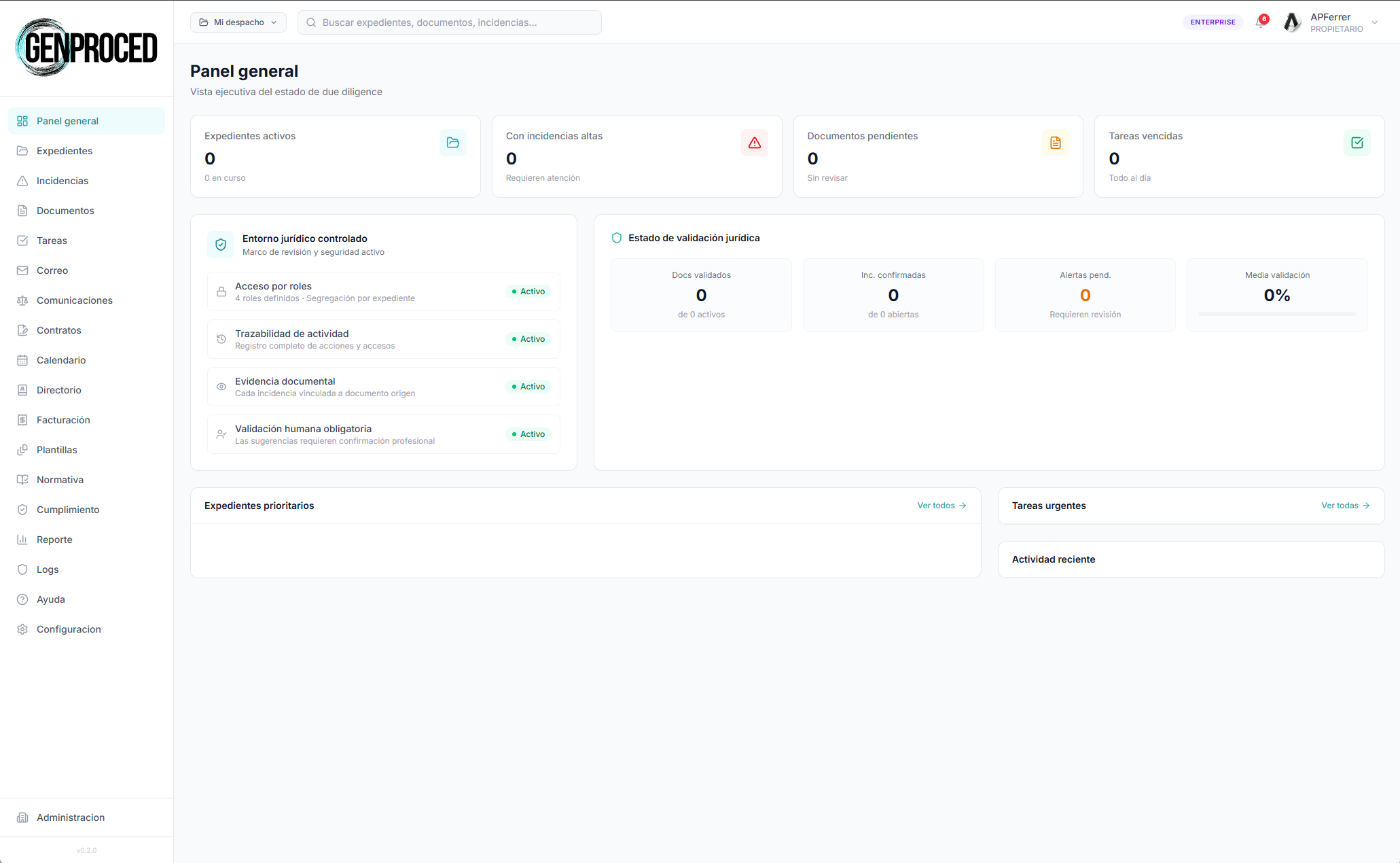
GenProced
Legal ERP v0.2.0 · Copiloto procesal
GenProced es un Legal ERP presentado como copiloto procesal para despachos de abogados y departamentos legales. Centraliza expedientes con historial y trazabilidad, detecta y clasifica incidencias con alertas por prioridad, gestiona documentos con OCR y plantillas automatizadas, organiza tareas con responsables y notificaciones, vincula la bandeja de correo (Gmail, Outlook, IMAP nativo) a expedientes concretos, ofrece calendario unificado con vistas, plazos y sincronización externa, controla contratos con vencimientos y renovaciones automáticas y mantiene un directorio de clientes, magistrados y contactos profesionales con acceso a normativa mediante búsqueda inteligente.
genproced.com
You're just a few clicks away from making everything better. 30 minutes, no commitment, to see if it fits.
If we need more, we'll adjust on the go. No commitment, no pressure. I'll tell you NO if we're not a fit and recommend who can help.
Book my call“I attended a week-long course with Aida on Google Sheets, and it was exactly what we needed. She taught us how to get the most out of the tool, solving real problems we faced daily. Direct, hands-on and tailored to our needs.”
“We'd been trying to improve our process management for years without success. With Aida we found the right tools and she helped us implement improvements that have driven our numbers up. I'd recommend her services to any company looking for results.”
“We needed to handle huge amounts of information and integrating it was nearly impossible. Aida designed an interface that was friendly, simple and stripped out unnecessary steps. Now we manage everything much faster.”
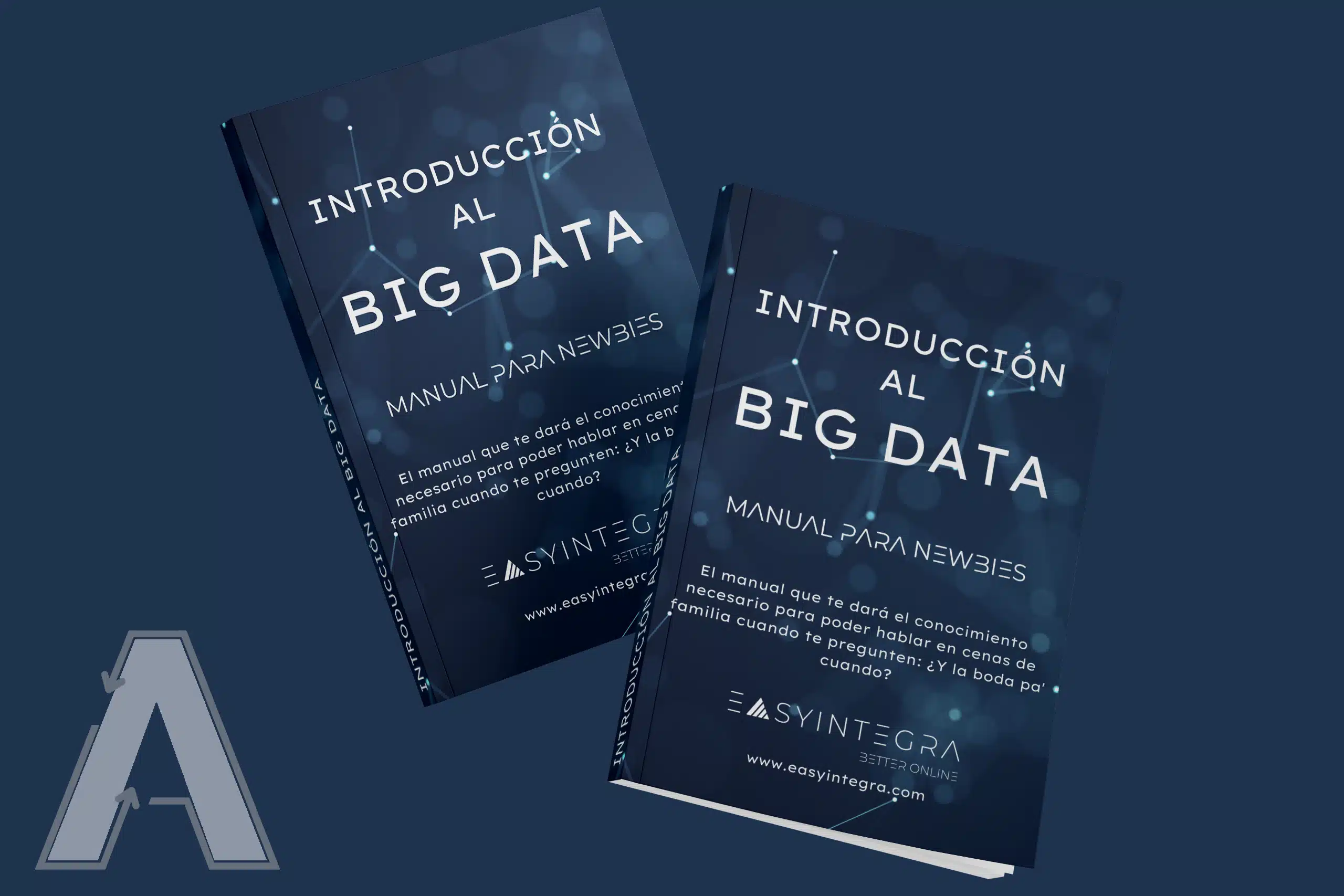
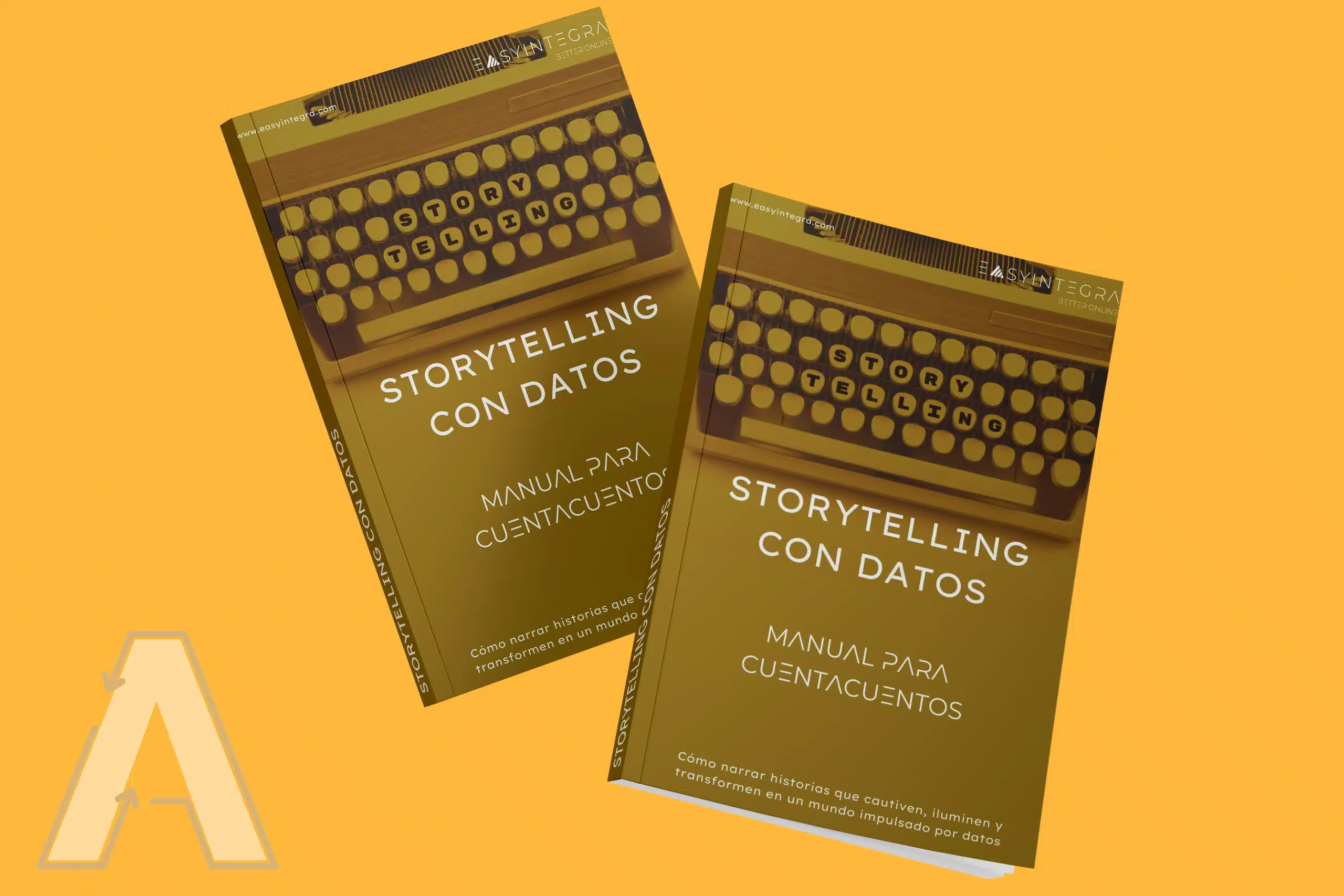
Big Data, AI, taxation, digital assets, emotional intelligence and storytelling. All available on Amazon.
Concepts, frameworks and decisions that show up in any product build, architecture or digitalisation project.
Data Mesh is a decentralised data architecture proposed by Zhamak Dehghani in 2019. Instead of a central team controlling a data warehouse, each business domain (sales, finance, operations) manages its data as a product. It makes sense when there are multiple domains with heterogeneous data, autonomous teams, and centralisation has become a bottleneck. In SMBs it is often applied in lightweight versions: clear domain owners and minimum quality standards.
Data architecture is the structure: how data is modelled, stored, integrated and governed across the organisation (sources, models, flows, quality). Business Intelligence is consumption: dashboards, reports and analyses built on top of that architecture. Without a solid architecture, BI reports tend to be inconsistent or hard to maintain.
An operational dashboard shows near real-time metrics so the team can decide today (open tickets, stock, production queue). A strategic one aggregates data over weeks or months for direction: revenue by segment, churn, acquisition. Mixing them usually produces dashboards nobody reads: operational ones with weekly data or strategic ones cluttered with granular detail.
When the task involves generating, summarising or rephrasing text, code or structures, the success criteria are clear, and you are willing to verify the output. Typical cases: drafting, classifying emails, extracting data from PDFs, prototyping interfaces. Not advisable for critical decisions without human oversight, or with highly confidential data unless deployed on-premises or in a private cloud.
DAMA-DMBOK (Data Management Body of Knowledge) is the most widely used reference framework for data management, maintained by DAMA International. It defines 11 areas: governance, architecture, modelling, quality, security, integration, BI, metadata, document management, master data and life cycle. It works as a checklist to assess maturity and plan improvements.
Data Lake: repository that stores data in its raw format, without a predefined schema, useful for exploratory analysis and machine learning. Data Warehouse: structured store with a defined schema, optimised for BI and historical reporting. Data Mart: thematic subset of the Data Warehouse (for example, marketing or finance) aimed at a specific team. The three layers can coexist.
EU Regulation 2024/1689 classifies AI systems into four levels: unacceptable risk (banned, e.g. social scoring), high risk (education, HR, healthcare, justice), limited risk (chatbots and deepfakes with mandatory labelling) and minimal risk (everything else). High-risk systems must meet requirements for risk management, data quality, transparency, human oversight and registration in a European database.
Few and shared. Examples: average time from lead to first invoice (crosses sales, operations and finance), customer retention rate (sales and support), average incident resolution time (support, product and operations), margin per product line (operations and finance). Each KPI must have a clear owner and a communication channel between areas.
SaaS works when the process is standard in your sector, the tool fits well and your differentiation is not in that process. Custom software works when the process is part of your competitive advantage, existing SaaS forces you to adapt the business to its model, or you need to integrate pieces that do not fit. A frequent hybrid: SaaS for the standard parts and a thin custom layer connecting them.
Common causes: diffuse responsibilities (many validate, no one decides), excess meetings replacing deliverables, dependence on one key person, lack of cross-team KPIs and disconnected tools that force manual data copying. The first step is usually to map the real flow (not the official one) and measure time per stage.
BPMN (Business Process Model and Notation) is an OMG standard for representing business processes with diagrams. It lets business and tech speak the same language: actors, tasks, decisions, events and messages with consistent notation. It is used to document current processes, design improvements and, in some engines, execute them directly.
Four blocks. Sales: pipeline, conversion rate, average ticket. Operations: average delivery time and error rate. Finance: gross margin, runway or cash on hand and collection/payment days. Customer: NPS or equivalent and retention rate. Better a few well-defined KPIs reviewed monthly than a hundred dashboards no one looks at.